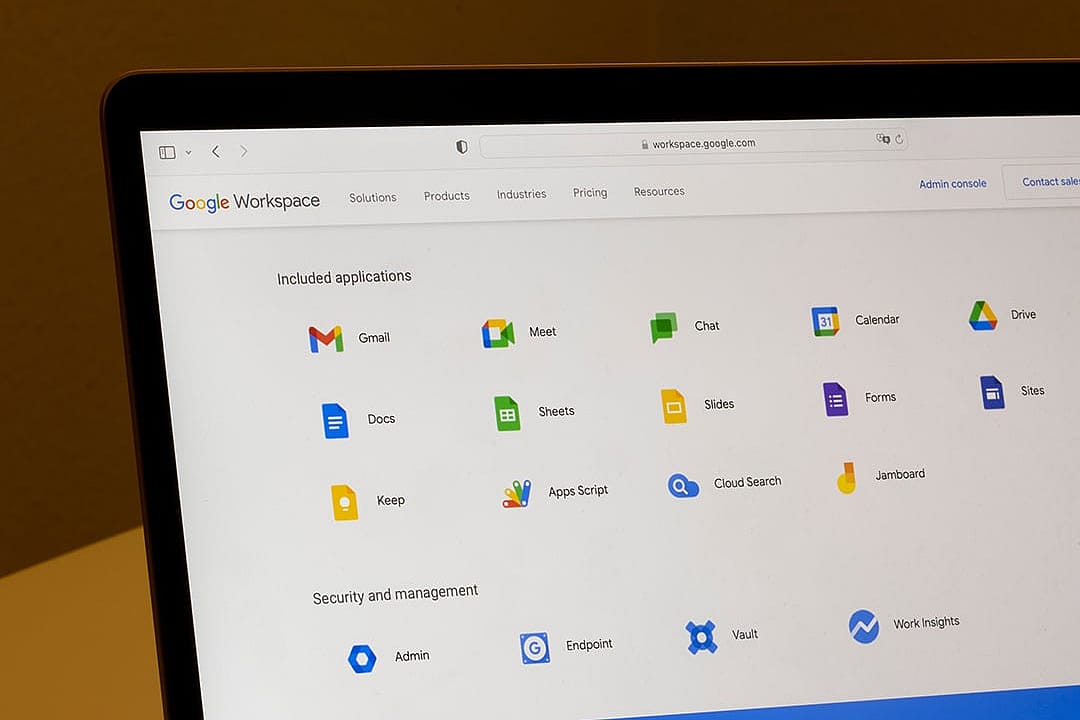

If you’re connecting your CRM to Google Workspace, you’ll eventually land on a screen asking for admin approval. It’s a common roadblock for small teams, but Google has simplified the process. Now, users attempting to integrate the two can see an option to send the administrator, whoever that may be, a review request during the process.
This Google Workspace approval workflow is a point of reference and control, ensuring that only the official administrator can clear the request. This Nutshell guide serves as a breakdown of the five essential steps small businesses must take to move beyond the approval stage and complete the integration process.
Most modern CRM systems integrate with Gmail and Google Calendar, and the Google sign-in process is the same for each setup. Determining who should approve the connection is the stumbling block small business teams often face. When it comes to Google Workspace, businesses must assign an administrator to approve third-party app integrations as a security measure.
Google Workspace is a paid application designed for business use, providing an array of useful business tools and allowing companies to set up domain-specific email addresses. The Google Admin console offers a list of built-in administrative roles, and the Workspace admin for a company will be allocated a role here.
Having an official admin assigned gives businesses an important security checkpoint. Establishing that point of review is far safer than letting a third-party service provider handle the full setup. In fact, a 2025 Data Breach Investigations report compiled by Verizon revealed that the percentage of breaches related to third-party involvement was 30%, twice as much as it was the previous year.
The inclusion of an admin approval step shouldn’t become a roadblock for teams that need their Google Workspace accounts connected to their CRM. Following these five steps should ensure teams experience a smooth integration process.
It’s useful to know who your company’s Workspace admin is ahead of setting up the integration. A dedicated IT person, the person who set up your company email address, or whoever manages your website should be the first people you ask.
The person who set up the company’s Workspace account is typically automatically assigned the role of super admin, giving them access to every Admin console feature. Super admins have the ability to view and assign admin roles as needed. To safeguard against lockouts and ensure business continuity, Google recommends that Workspace users assign two super admins.
If you’re setting up the Workspace CRM connection and you’re not an admin, you may see an option within the approval workflow to ask an admin to review the request. According to Google, this option appears when trying to access an unconfigured application.
If you know who your admin is, give them a heads-up regarding the review request coming their way. If not, and the option to request a review is available to you, it will send the assigned administrator a notification to approve the request. Either way, knowing the name of your admin will make the process easier.
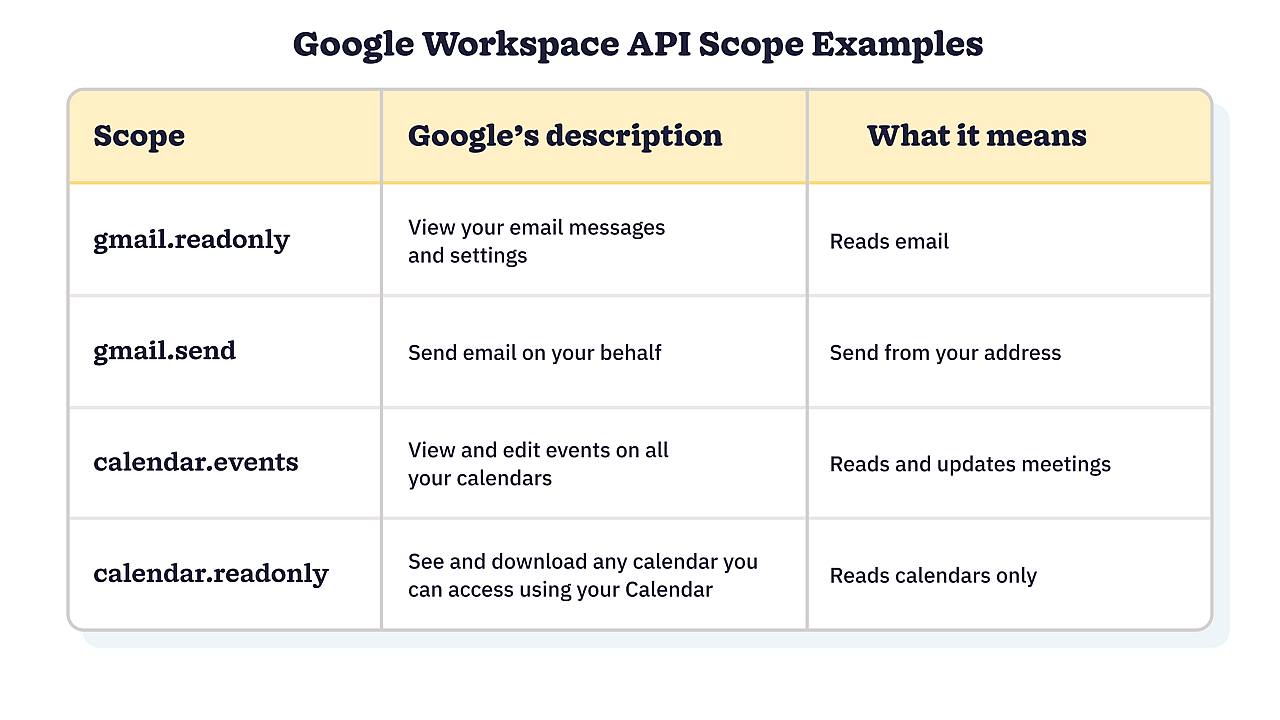
Google’s approval screen will display a list of access types, each showing its API scope and description. Reading through this list is important to ensuring your integration has the correct access to perform the actions you need.
Equally important is removing the API scopes you don’t need. In fact, Google recommends requesting the narrowest scope for the actions required. It also warns that applications using Gmail API scopes that are sensitive or restricted need to pass OAuth verification.
In essence, you should determine your goal, then select the API scopes that represent that goal. For example, if you want the integration to read and update meetings, you should include the “calendar.events” API scope on your list.
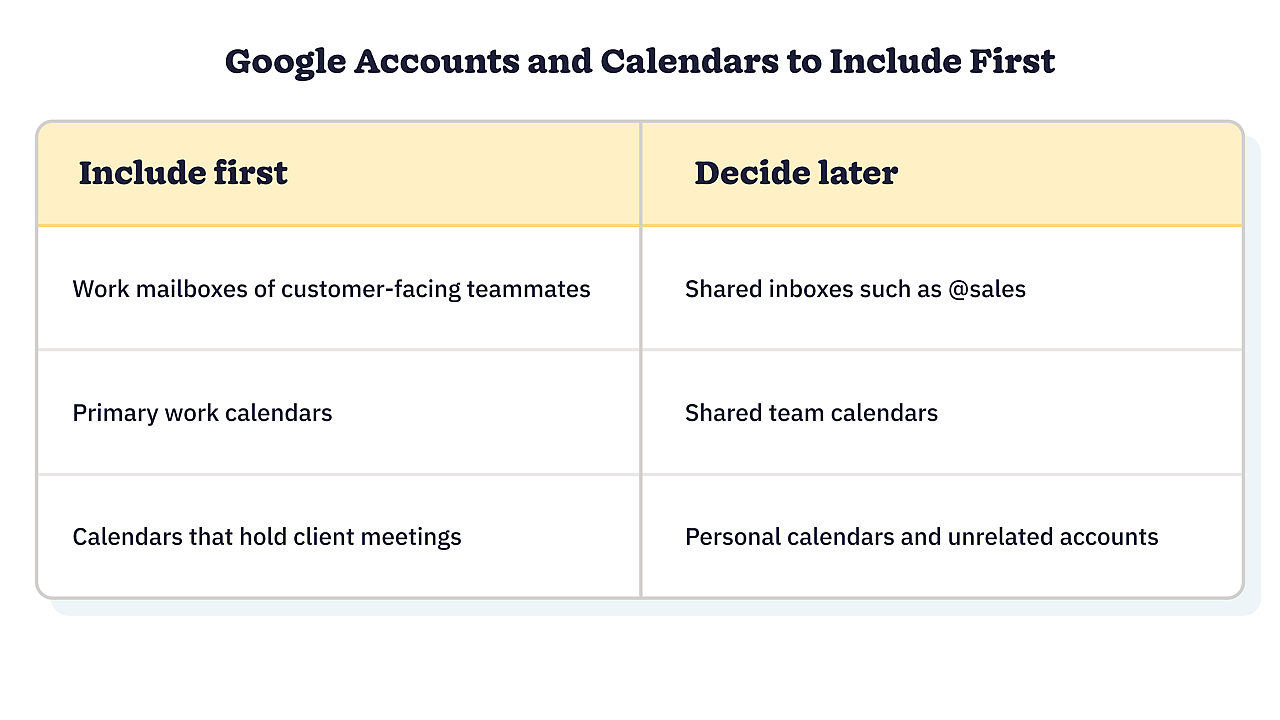
Just because your admin has approved the app connection doesn’t mean that your team automatically has access. Each team member needs to sign in to their Google account to connect. But once they do, the connected CRM and everyone else who has access can see that team member’s email and calendars.
That means there are two things to decide at this point. The first is determining who should connect. Customer-facing team members are typically connected first, with shared inboxes added later.
The second is establishing what each account will see. For instance, allowing Google Calendar access allows the team member to see any calendar they’re able to open, including shared team calendars and any personal calendars teammates may have added.
At this point, your administrator can log in to Google’s Admin console to allow the app access to your CRM. There are three possible access states your admin will see in the Admin console:
Choose “Trusted” if you want to connect your CRM with Gmail and Google Calendar and you’ve double-checked the API scopes. Any restrictions applied in your Google services settings to Gmail will prevent a “Limited” app from reaching it.
There are two key places to check to ensure your Google Workspace CRM integration is working properly.
The first place to check is the OAuth log events in the Admin console. You’ll need the Audit and Investigation administrator clearance level for this. Here, you’ll be able to see who connected what. It’ll show you each time the app is authorized, along with the app name, API scope, and user.
Your second checkpoint is the CRM. Run a test by sending an email to a test contact, scheduling a test meeting, and confirming that both of these surface where you’d expect them to. Review the list of accounts you worked with in step three rather than making any settings adjustments if you find anything missing.
Navigating admin approval when integrating Google Workspace with your CRM may seem intimidating to small business teams with no dedicated IT person. But this five-step process is actually easy for small teams to execute, especially when you consider that the owner of the business is often the administrator.
Walking through this setup is also an opportunity to document the process, so your team knows exactly what to do next time you want to set up additional app connections.
This story was produced by Nutshell and reviewed and distributed by Stacker.