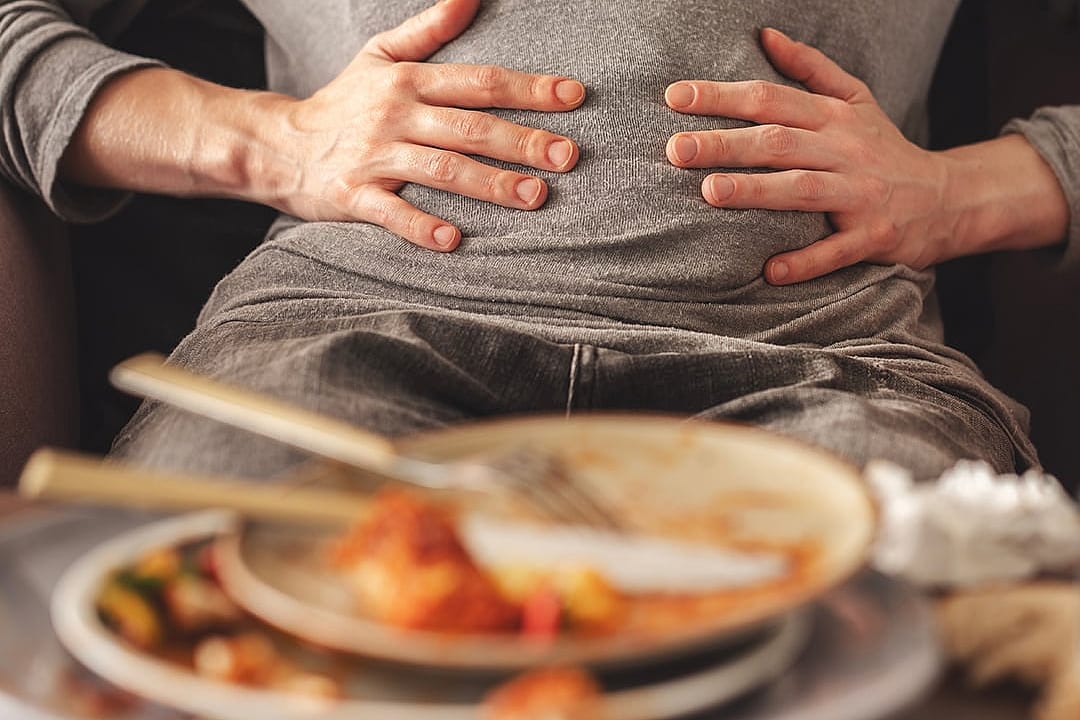

You’ve just chowed down on all your favorite foods when suddenly it hits: holiday bloating. Your stomach feels fuller, tighter or just plain uncomfortable. That dreaded stomach bloat can really sour your sugar cookies. But before you turn into Scrooge and exclaim “bah, humbug” to holiday celebrations, know this: Holiday bloating doesn’t have to be an unwelcome guest at your family meal.
Below, Life Extension shares what you need to know about managing holiday bloat. Understanding what causes bloating after big meals and what you can do before, during and after holiday gatherings can help you feel more comfortable. Plus, the less time you spend worrying about your stomach, the more time you get to enjoy all the season has to offer.
First, let’s understand the basics of bloating. Bloating is the feeling that your stomach is:
You may see the effects in how your clothes fit. The zipper on your jeans (which glided right up when you got dressed) doesn't come up all the way, or the buttons on your shirt bulge forward like they're hanging on for dear life.
If it's any comfort, though, you're likely the one most aware of your "food baby." Bloating is often confused with abdominal distention, but they are not one and the same. Abdominal distention is an observable and measurable increase in abdominal girth—a slightly tighter waistline doesn't qualify.
The most common causes of bloating include:
If you attend just one holiday get-together, you're likely to encounter one (if not all) of these potential triggers. For some people, one oversized meal is all it takes to provoke bloating.
Many holiday meals are a buffet of irresistible foods. And some of those foods are so special that they only make it on the menu once a year. Of course, you don't want to miss out on your chance to dig in. But maybe you dug a little too deep, and now you're in over your head. This is called eating past the point of fullness, and it's very common during the holidays.
While the stomach can expand to hold the extra volume, the stretching and pressure can make bloating after overeating feel even more uncomfortable. Not to mention, large portions and multiple-course meals put a lot of demand on the digestive system by adding more food and liquid to the stomach, increasing stretching, pressure and feelings of fullness. High-fat foods may also slow gastric emptying, which can make fullness last longer.
Additionally, the multitasking nature of a holiday meal could result in you eating more than you intend to, ignoring your fullness cues. There are a lot of distractions during the holidays that may make you rush through your meals. Maybe you're chatting with Uncle Bill while scarfing down Aunt May's ham biscuits. Next thing you know, your plate is wiped clean, and you're burping up the leftovers.
Studies have shown a Western-style diet high in fat and animal proteins is associated with a lower abundance of beneficial bacteria that produce short-chain fatty acids. Short-chain fatty acids (SCFAs) play an important role in overall health. The key to producing these SCFAs is to consume a diet rich in fiber and starch. Fiber and starch get fermented by beneficial gut bacteria, and the fermentation process is what produces SCFAs.
The problem is holiday meals tend to be higher in fat and lower in fiber, thanks to all the cheesy, buttery and meaty recipes that bring people together. Does that mean the holidays are going to derail your gut health? Not exactly.
Yes, eating more high-fat foods changes the types of nutrients available for the gut microbes. But a few holiday meals won't completely reset your microbiome. With a concerted effort to increase your intake of a variety of fiber-rich foods, your gut health will adapt and overcome.
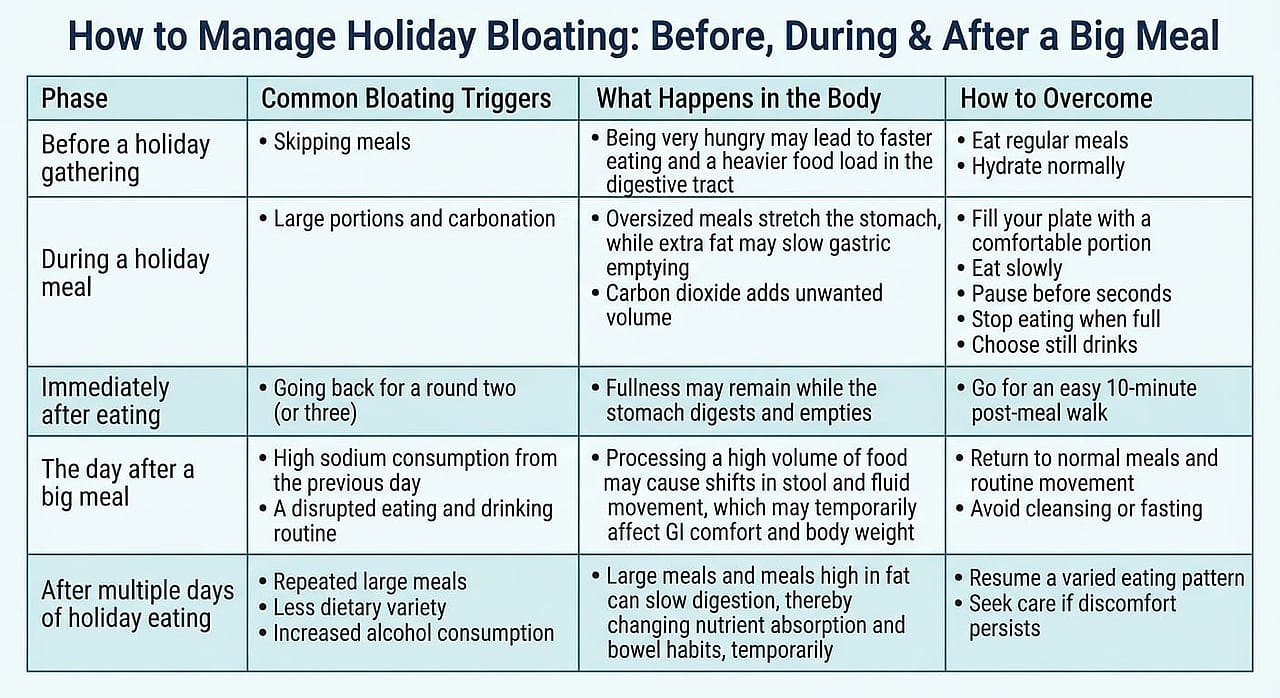
You're likely enjoying a variety of dishes around the holidays, which can make it tricky to identify exactly which food triggers stomach bloating. Plus, each body is unique.
That said, there are a few common culprits:
On the other side of your discomfort are foods and bloating supplements that can help you get back to the party with some pep in your step. Keep in mind, the benefits of these particular foods or extracts vary depending on the person, the form and the amount consumed.
Occasional bloating is usually nothing to worry about. As Life Extension director of education Dr. Michael A. Smith, M.D., puts it, "Many people assume holiday bloating means they have impacted their health or gained weight. The most important thing to understand is that these changes are temporary."
If you eat a larger-than-normal meal, you might experience larger-than-normal discomfort. Bloating after holidays is less concerning when you can clearly identify the trigger, when it's mild in nature and when the feeling subsides within a reasonable amount of time.
There are, of course, more concerning forms of bloating. For instance, if bloating occurs frequently with or without a known trigger, you may want to alert your healthcare provider.
Also, if one instance of bloating persists long after food has cleared through the digestive tract, that could be a red flag. Always take note of your specific sensations of bloating and any other associated symptoms.
Should these physical cues intensify or interfere with your daily routine, call your doctor for a more thorough evaluation.
Most importantly, do not ignore worsening stomach discomfort or try to self-diagnose. Leave it to the professionals to get your digestive tract back on track.
While bloating, water retention and weight gain may come with some of the same pitfalls, they are distinctly different. For one, bloating is the feeling of fullness, pressure or occasional gas in the abdomen. These symptoms are fluid and can change within a few short hours, as food moves through the digestive tract.
Water retention occurs when you're holding on to extra fluid. This can happen when you consume foods high in sodium. Extra sodium in the blood changes the electrolyte composition of your extracellular fluid. The body then holds on to extra water to dilute some of the concentration and help restore balance.
Eventually, healthy kidneys filter and flush out the excess sodium and water. Unlike bloating, this can cause temporary discomfort throughout the body—not just the midsection.
How can you tell if it's fat vs. bloat? With bloating and water retention, you may see the scale creep up, but it will likely shift back down as soon as your fluids and bowels start to shift.
On the other hand, true weight gain is caused by a consistent surplus of calories. If you're regularly eating large meals or high-fat, high-carbohydrate foods, the body will start to store excess fat, which takes much longer to drop than a little extra water or occasional gas.
Can you flatten a bloated stomach?
Time is often the best course of action for bloating. Temporary gas, high food volume or occasional constipation usually settle once the food has been fully digested and you have a normal bowel movement.
Remember, larger, heavier meals require more time to digest, so be patient with yourself. To move things along faster, try gentle movement like walking. Also, be sure to avoid any known bloating triggers and balance the rest of your day with lighter fare or smaller portions.
How long does holiday bloating last?
Unfortunately, there is no definitive time frame for when bloating will subside. Mild bloating can improve within a few hours. But with occasional constipation or indigestion also in the mix, it could last longer. It all depends on your body's personal tolerance or intolerance to the food you ate.
Does drinking water help with bloating?
Drinking water can help balance fluids after consuming high-sodium foods, support normal bowel movements and keep your body well hydrated. But avoid overcompensating. Drink according to your normal needs rather than forcing a large amount at once. Additionally, you might want to consider still beverages rather than carbonated ones.
This story was produced by Life Extension and reviewed and distributed by Stacker.